SS-31 is one of the few peptides on this site that made it all the way to an approved medicine. But the approval is narrow, it rests on limited evidence, and it says nothing about the longevity and energy claims you will see online. Here is the full picture.
What SS-31 actually is
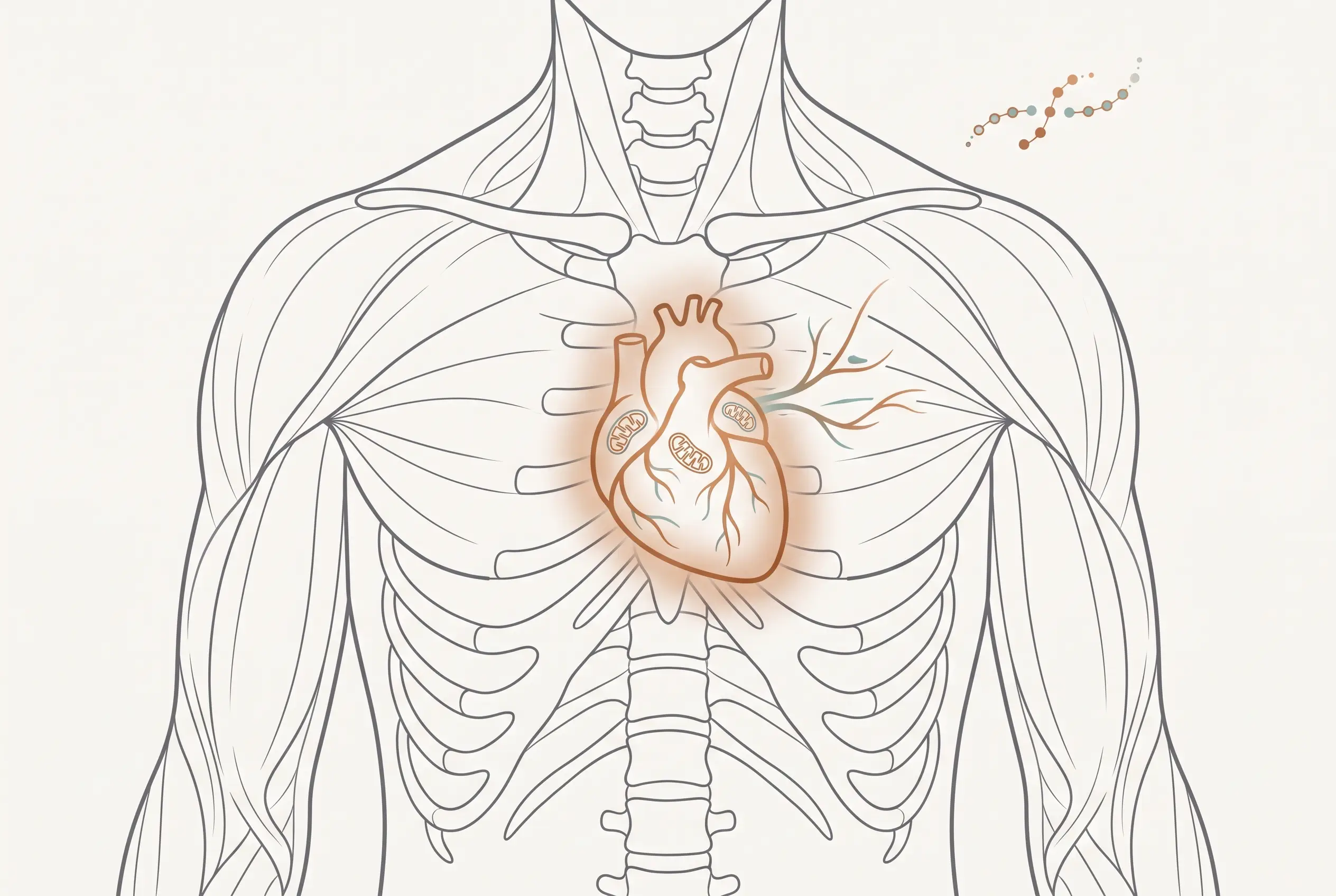
SS-31 is a small peptide, a short chain of amino acids (the building blocks of protein). Its target is the mitochondria, the tiny power plants inside your cells. The FDA label describes it as a mitochondrial cardiolipin binder: it attaches to cardiolipin, a fat found in the inner membrane of mitochondria. Its drug name is elamipretide (older code MTP-131), and its US brand name is Forzinity.
Is SS-31 approved?
Yes, but only for one rare disease, and only in the US as far as we have verified. Barth syndrome is a rare inherited condition, mostly affecting boys and men, that can cause weak muscles, heart problems, and severe tiredness.
| Jurisdiction | Product | Approved use | Approval type | Date | Source |
|---|---|---|---|---|---|
| United States (FDA) | Forzinity (elamipretide) injection | To improve muscle strength in adult and pediatric patients with Barth syndrome weighing at least 30 kg | Accelerated approval | September 19, 2025 | FDA announcement and prescribing information |
| Other countries | Not verified | Not verified | Not verified | Checked September 15, 2026 | We did not verify approvals outside the US |
What the approval was actually based on
This is the part most pages skip. According to the FDA prescribing information, Forzinity was tested in a randomized, double-blind, placebo-controlled crossover trial in 12 people aged 12 or older with Barth syndrome, for 12 weeks. Its two main goals were how far people could walk in six minutes and a fatigue score. Forzinity was not better than placebo on either of those main goals.
Knee muscle strength was a secondary measure. It did not improve during the 12-week controlled trial, but it did increase during a long open-label extension, where everyone knew they were taking the drug and there was no placebo group. Eight people stayed in through week 168.
The FDA granted accelerated approval based on that strength change, which it treats as an intermediate endpoint: a measure considered reasonably likely to predict a real benefit, such as standing up more easily or walking farther. As a condition of the approval, the manufacturer must run a new randomized, placebo-controlled trial to confirm that benefit, and the label says continued approval may depend on it.
What other trials found
Elamipretide has also been tested outside Barth syndrome. The largest trial, MMPOWER-3, randomized 218 adults with primary mitochondrial myopathy (a group of genetic muscle diseases caused by faulty mitochondria) to elamipretide or placebo for 24 weeks. It did not meet its main goals for walking distance or fatigue.
It has also been studied in heart and eye conditions. None of that research has produced an approval, and none of it tested healthy people looking for more energy or slower ageing.
Is SS-31 safe?
For the approved product, the FDA label lists injection site reactions as the most common side effect, warns not to use it in newborns because it contains benzyl alcohol, and says not to use it in people with a serious allergy to its ingredients. That safety information applies to Forzinity used as prescribed, in the people it was studied in. It tells you nothing about an unregulated vial bought online.
What the evidence supports
- A real FDA accelerated approval for Barth syndrome, in the US, in 2025
- A clear scientific target: cardiolipin in the mitochondria
- Muscle strength gains in a small open-label extension, enough for accelerated approval
What it does NOT show
- That it improved walking distance or fatigue against placebo (it did not, in the approval trial or in MMPOWER-3)
- That it slows ageing or boosts energy in healthy people (never tested)
- That research-chemical 'SS-31' is the same as Forzinity
Who talks about it and why to be careful
SS-31 is popular in longevity and biohacking circles, and the approval makes it easier to sell. Expect to see 'FDA-approved' used to make an online vial sound legitimate. Keep the facts straight: one approval, one rare disease, a very small trial, a confirmatory trial still required, and no evidence at all in healthy people. If you or a family member lives with Barth syndrome or a mitochondrial disease, a specialist doctor is the right route.
What this does not mean
- This does not mean SS-31 is approved for longevity, energy, or healthy ageing. The approval covers Barth syndrome only.
- This does not mean the approval is final. It is an accelerated approval that depends on a confirmatory trial.
- This does not mean research-chemical SS-31 is safe or genuine. It is not the approved product.
- This is general education, not medical advice or a recommendation to use SS-31.