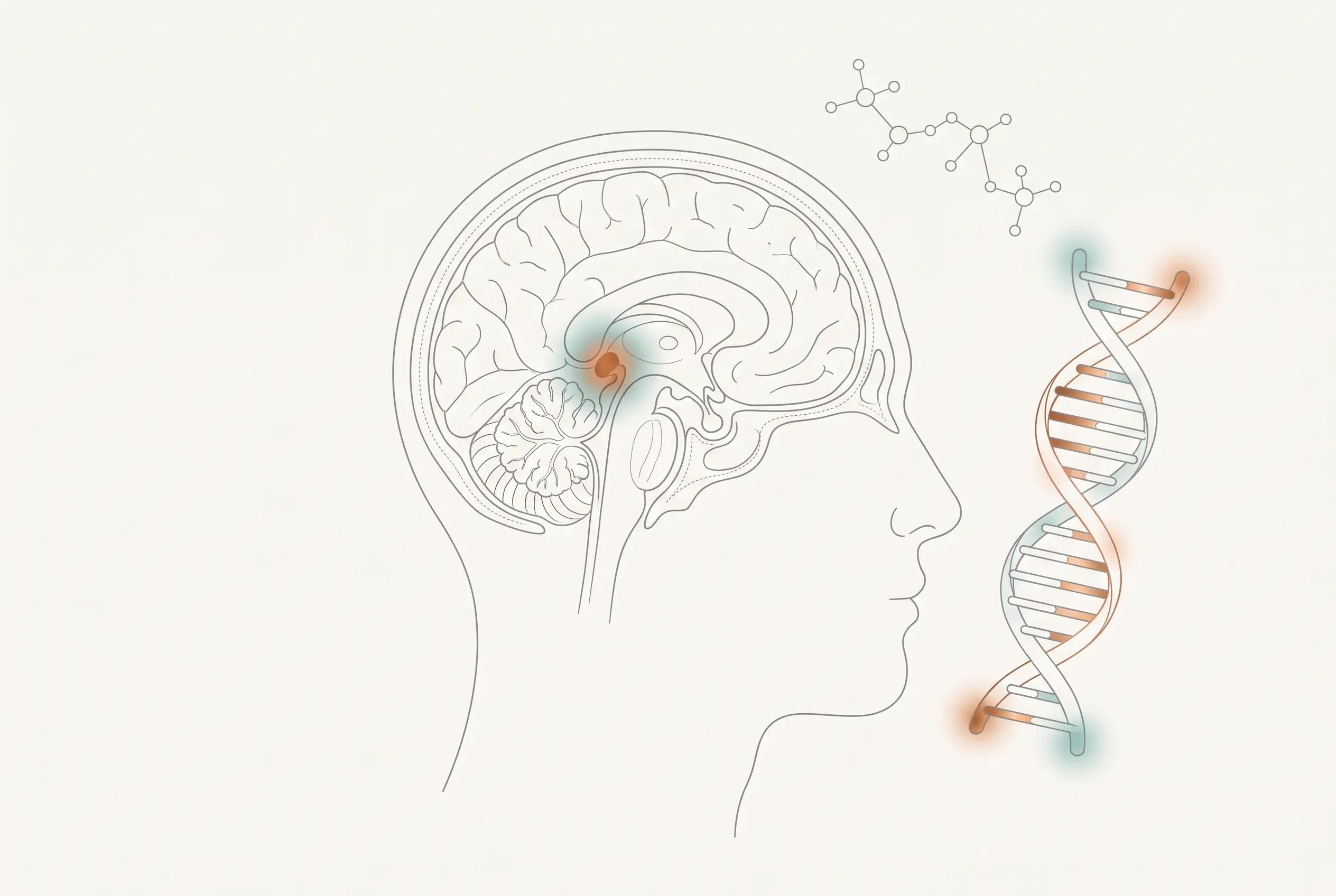
Epitalon (also spelled Epithalon) is a peptide that gets a lot of attention in anti-ageing and 'longevity' circles. The idea behind it is exciting, but the real evidence is thin. Here's the honest picture: a small, old-fashioned peptide, a handful of mostly Russian studies, very little independent human proof, and no approval as a medicine.
What Epitalon actually is
Epitalon is a man-made peptide: a very short chain of just four amino acids (the tiny building blocks that make up protein). It's based on a natural substance called epithalamin, which comes from the pineal gland, a pea-sized gland deep in the brain that helps control your sleep-wake cycle. The version people talk about is made in a lab as a simple copy of that natural fragment.
What it's studied for
In research (much of it done decades ago in Russia), Epitalon has been looked at for:
- Ageing and general 'longevity'
- Telomeres: the protective caps on the ends of your DNA that get shorter as cells age
- Sleep and the body's daily 'circadian' rhythm (its natural 24-hour clock)
On paper that sounds remarkable. The catch is how little solid, independent proof sits behind it.
What the evidence really shows
Most of the promising Epitalon results come from a small number of studies, many of them older and done by the same Russian research groups. That doesn't make them wrong, but it means the findings haven't been widely repeated by independent scientists, and many studies were small. There is very little modern, high-quality human evidence, so we simply can't say how well it works (or how safe it is) in people.
What the research points to
- Early, interesting findings in a small set of ageing studies
- A biological idea (telomeres, the body clock) that scientists find worth exploring
- Preliminary, unproven promise around sleep and ageing
What it does NOT prove
- That it slows ageing or extends life in humans
- That it's safe to inject: human safety isn't established
- That it's an approved or legal medical treatment
Who talks about it, and why to be careful
Epitalon is popular in biohacking and anti-ageing communities, where people share 'cycles' and personal stories. Remember that these are personal experiments with an unapproved chemical, not medical guidance. Big claims about 'turning back the clock' are based on limited studies plus anecdotes, not strong human proof. If you're worried about ageing or sleep, a qualified doctor is the right person to talk to.
What this does not mean
- This does not mean Epitalon is proven to slow ageing or lengthen telomeres in humans. The evidence is limited and early.
- This does not mean it's safe to buy and inject; unregulated products aren't checked for purity or safety.
- This is general education, not medical advice or a recommendation to use Epitalon.