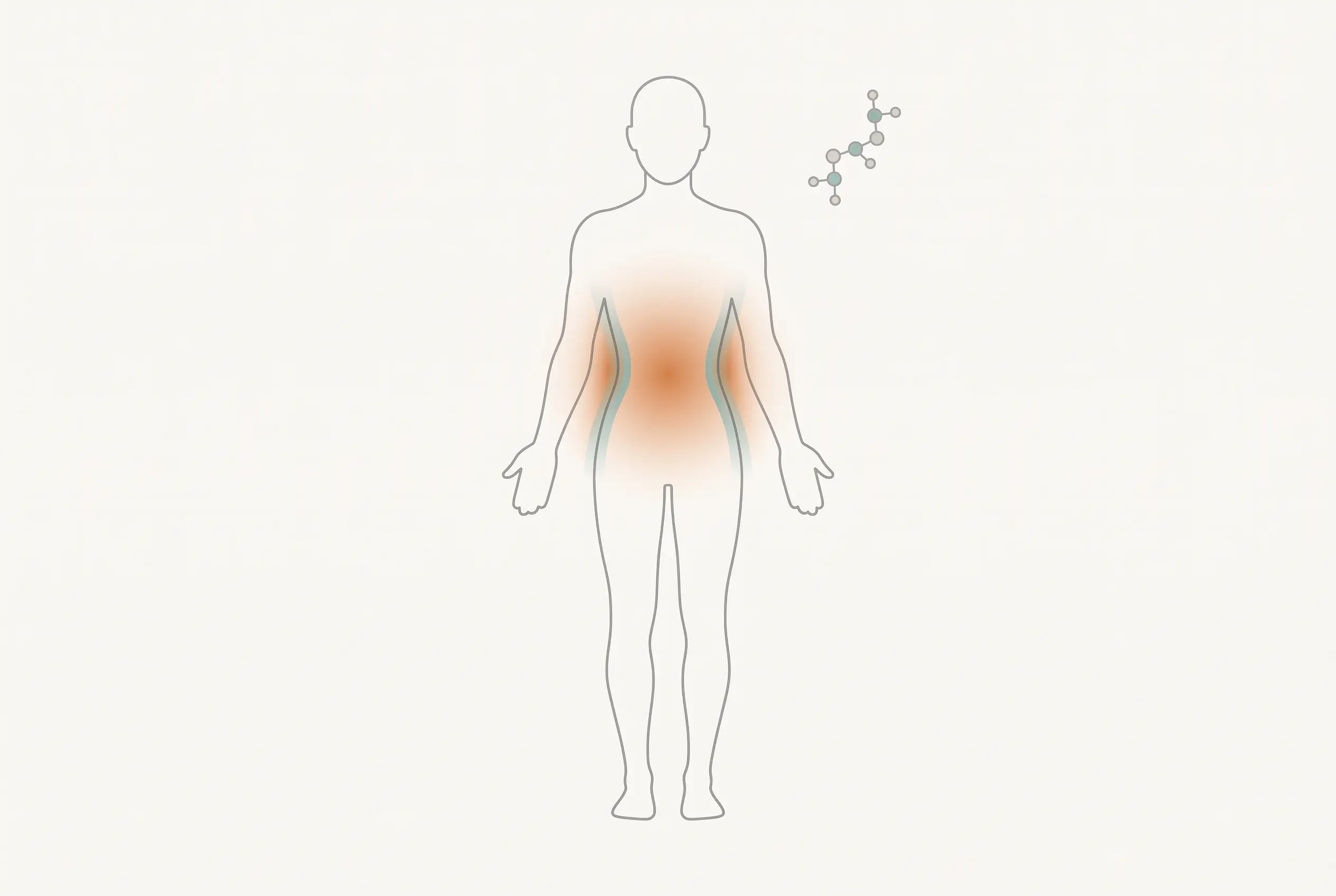
Pramlintide is one of the most quietly interesting names in this whole area, and almost nobody talks about it. It's a copy of a hormone called amylin, the same hormone the buzzy new drug cagrilintide is copying. The difference is that pramlintide has been an approved medicine since 2005, and cagrilintide still isn't approved in the US or EU. As of September 15, 2026, the CagriSema combination (cagrilintide plus semaglutide) has been under FDA review since a December 2025 submission. If you want to know what an amylin drug actually does in real people over a real year, pramlintide is the one that has the answer.
What pramlintide actually is
Pramlintide is a lab-made peptide: a peptide is just a short chain of amino acids, the tiny building blocks that make up protein. It's designed to copy a natural hormone called amylin.
Amylin is the hormone almost nobody's heard of. Your pancreas releases it at the same time as insulin, every time you eat. It does three things: it tells your brain you've had enough, it slows how fast food leaves your stomach, and it turns down a signal that would otherwise push your liver to dump more sugar into your blood after a meal.
Here's the piece that explains the whole drug. In type 1 diabetes, the immune system destroys the cells in the pancreas that make insulin, and those are the same cells that make amylin. So people with type 1 diabetes aren't short one hormone. They're short two. Insulin replaces one of them. Pramlintide was built to replace the other.
The cagrilintide connection: this is the useful bit
If you've been reading about weight-loss peptides, you've probably run into cagrilintide (usually as 'CagriSema,' where it's paired with semaglutide). Cagrilintide is an amylin analog, a copy of amylin. So is pramlintide. Same hormone, same basic idea, twenty years apart.
| Pramlintide (Symlin) | Cagrilintide | |
|---|---|---|
| What it copies | Amylin | Amylin |
| Status | FDA-approved since 2005 | Investigational. Not approved in the US or EU; the CagriSema combination has been under FDA review since a December 2025 submission |
| What it's for | Mealtime blood sugar in diabetes, with insulin | Being tested for weight loss |
| How often | Before meals | Weekly, in trial settings |
| Can a doctor prescribe it? | Yes, for its approved use | No, it isn't approved |
Why does this matter to you? Because amylin isn't a new or exotic idea being invented by the supplement internet. It's a real hormone with a real approved drug behind it. And because pramlintide's own history is a useful reality check: an amylin drug got approved, worked, caused modest weight loss, and still never became a blockbuster. 'Copies a fullness hormone' does not automatically mean 'life-changing weight loss.' Cagrilintide might turn out better (the newer trials are genuinely promising), but the honest baseline is right here.
What it's approved and used for
Pramlintide is FDA-approved, sold as Symlin, and it's prescription-only. It's approved for people who already use insulin at mealtimes and still aren't hitting their blood sugar targets:
- Adults with type 1 diabetes who use mealtime insulin
- Adults with type 2 diabetes who use mealtime insulin
Note what's not on that list: weight loss. Pramlintide does cause some weight loss, and that's well documented, but it has never been approved as a weight-loss drug. It's approved as an add-on to insulin for blood sugar. That distinction is the whole reason it's not a household name.
What the evidence really shows
This is the strong part, and it's why pramlintide is worth knowing about. It's backed by year-long human clinical trials, not animal studies, not lab dishes. That's what earned it approval.
- A 52-week trial in 656 adults with type 2 diabetes on insulin found that adding pramlintide improved long-term blood sugar control compared with placebo (a dummy injection), and came with a small average weight loss while the placebo group slightly gained.
- A 52-week trial in 651 adults with type 1 diabetes found the same pattern: better long-term blood sugar control than placebo, without needing more insulin, plus a small weight difference.
- Shorter, tightly controlled studies showed the mechanism is real: people on pramlintide genuinely ate less at meals and reported feeling more in control of their eating, not just weighing less.
So: real, checked, human evidence. But be honest about the size of it. The blood sugar improvements were meaningful but modest, and the weight changes were measured in a kilogram or two over a year, not the double-digit percentages people now associate with GLP-1 drugs. Pramlintide works. It just doesn't work dramatically.
What the research points to
- Reviewed, year-long human evidence for its approved use: mealtime blood sugar control alongside insulin
- That copying amylin really does reduce how much people eat and increase fullness
- That it's the one amylin analog that has actually cleared approval, unlike cagrilintide
- A modest weight benefit as a documented side effect of its approved use
What it does NOT prove
- That it's approved or appropriate as a weight-loss drug: it isn't
- That it delivers weight loss anywhere near the newer GLP-1 drugs: it doesn't
- That it's safe to use without a doctor, given the boxed warning for severe low blood sugar
- That 'research chemical' pramlintide online is the same as the real, quality-checked medicine
Why you've never heard of it
Fair question. Pramlintide has been approved for two decades and it's still niche. A few honest reasons: the benefits are modest, it means extra injections on top of insulin you're already taking, nausea is common early on, the low-blood-sugar warning makes doctors cautious, and it only helps a fairly narrow group: people already on mealtime insulin. Then GLP-1 drugs arrived and did more, with less hassle, for far more people. Pramlintide didn't fail. It just got out-competed.
Who talks about it, and why to be careful
Pramlintide gets mentioned in two places: diabetes communities, where it's a legitimate if uncommon option, and the peptide-seller corner of the internet, where it's marketed as an 'amylin' add-on for appetite control. That second use isn't approved, isn't studied that way, and ignores the biggest risk. This is a drug built to be used with insulin under supervision. The low-blood-sugar warning isn't fine print. If you're interested in appetite or blood sugar, a doctor can tell you what's actually approved for you and monitor it properly.
What this does not mean
- This does not mean pramlintide is a weight-loss drug. It's approved for blood sugar control alongside insulin, and any weight change is a side effect of that approved use.
- This does not mean it's safe to use without a doctor; it carries a boxed warning for severe low blood sugar and is used together with insulin.
- This does not mean cagrilintide is proven because pramlintide is approved. They're different drugs at completely different stages.
- This does not mean online 'research' versions are the real, regulated medicine or safe to use.
- This is general education, not medical advice or a recommendation to use pramlintide.