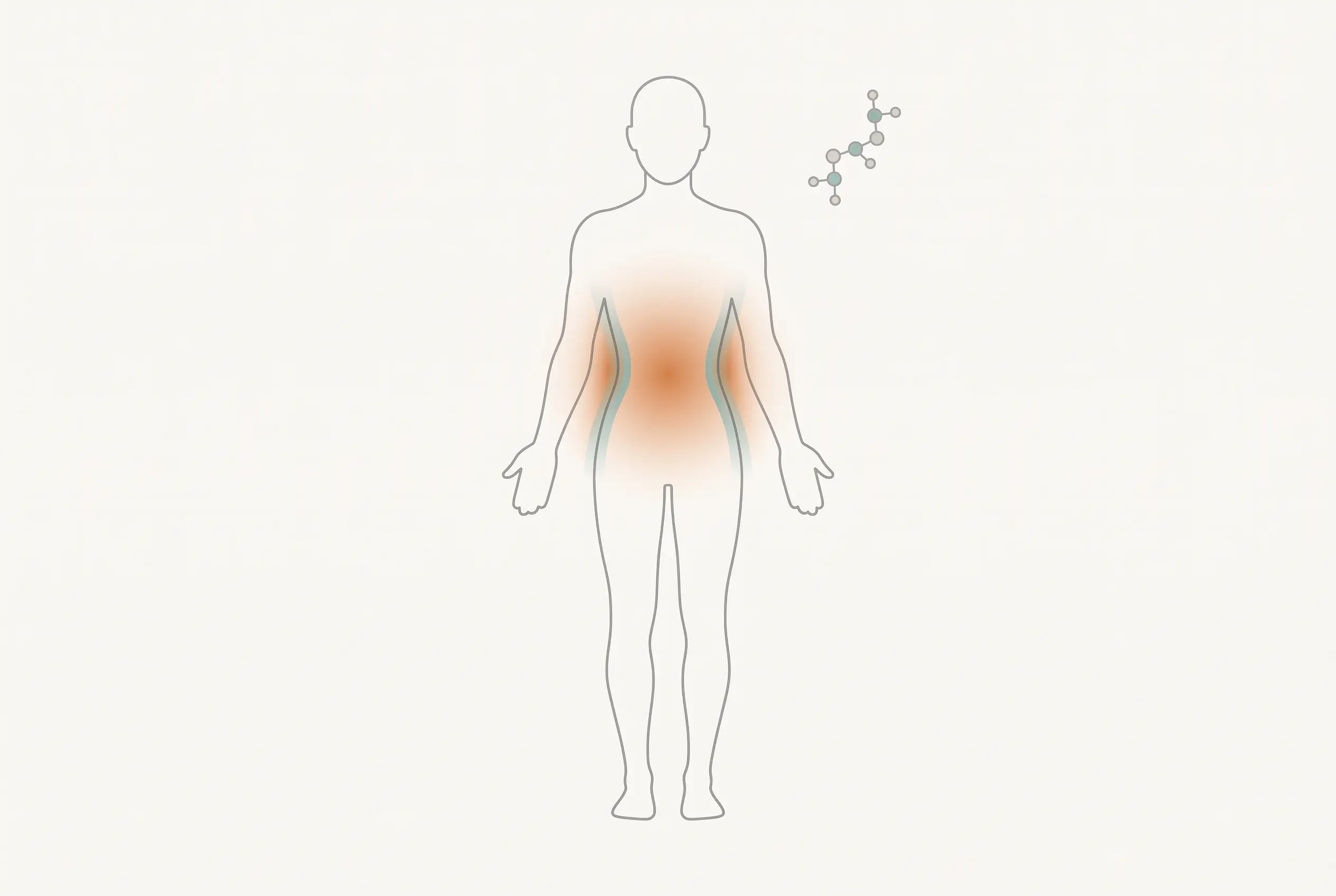
Cagrilintide is a newer name in the weight-loss world, often mentioned next to drugs like semaglutide (you'll also see it misspelled as "cagrilinitide"). It's a genuinely interesting idea that's being tested in real human trials, but it's not an approved medicine yet, and that's an important difference.
What cagrilintide actually is
Cagrilintide is a man-made peptide designed to copy a natural hormone called amylin. Your body releases amylin when you eat; it helps you feel full and slows how fast food leaves your stomach. A copy of amylin like cagrilintide is called an "amylin analog." The idea is that by mimicking amylin, it can help curb appetite and support weight loss.
What it's studied for
Cagrilintide is being studied mainly for:
- Weight loss and helping people feel full sooner
- Curbing appetite by copying the amylin 'fullness' signal
- Working together with semaglutide as a combination called 'CagriSema'
The 'CagriSema' combination (cagrilintide plus semaglutide) is the version getting the most attention, because pairing two different appetite signals may work better than one.
Does cagrilintide actually work?
Unlike some peptides that only have animal data, cagrilintide has been tested in human clinical trials. The biggest are two large, randomised, placebo-controlled Phase 3 trials of the CagriSema combination, REDEFINE 1 and REDEFINE 2, published in 2025. But published trial results are not the same as approval. As of September 15, 2026, no cagrilintide product is approved in the US or EU, and the long-term safety picture in everyday use is still being built. So it sits in the honest middle: real human research, no final green light.
The estimated mean percent change in body weight from baseline to week 68 was -20.4% with cagrilintide-semaglutide as compared with -3.0% with placebo (estimated difference, -17.3 percentage points; 95% confidence interval, -18.1 to -16.6; P<0.001).
New England Journal of Medicine, 2025 (PMID 40544433)
That's the REDEFINE 1 trial, and it's a genuinely strong result. It's also a result for the combination, produced in a monitored trial with the real trial medicine, not for a vial bought online.
Is cagrilintide approved yet?
Not in the US or EU, as of September 15, 2026. The version closest to approval is the combination: Novo Nordisk announced on December 18, 2025 that it had submitted CagriSema (cagrilintide plus semaglutide) to the FDA for weight management. Its August 4, 2026 interim report lists a US decision as expected in Q4 2026, and the FDA has not published an action date. Under review is not the same as approved. CagriSema is also not authorised in the EU.
Cagrilintide on its own is not approved in the US or EU either. Novo Nordisk is still developing it and lists the start of a high-dose cagrilintide Phase 3 program as a Q4 2026 milestone. Anything advertised online as cagrilintide is not the trial drug and hasn't been through any of the checks that make an approved medicine an approved medicine. For how the single peptide and the combination differ, see cagrilintide vs CagriSema.
What the research points to
- Published Phase 3 human-trial results for weight loss, mainly for the CagriSema combination
- A sensible scientific idea: copying the amylin 'fullness' hormone
- Extra interest when paired with semaglutide as 'CagriSema'
What it does NOT prove
- That it's a proven, approved weight-loss medicine
- That its long-term safety in people is fully established
- That 'research chemical' versions online are the real, quality-checked drug
Who talks about it, and why to be careful
Cagrilintide is popular in weight-loss and biohacking discussions, riding the wave of interest in drugs like semaglutide and tirzepatide. Remember that it's still investigational. The people using it safely are volunteers in monitored clinical trials, not people buying vials online. If you're looking at weight-loss options, a qualified doctor can point you to treatments that are actually approved and monitored.
What this does not mean
- This does not mean cagrilintide is a proven or approved weight-loss medicine. It isn't approved in the US or EU, and the CagriSema combination is still under FDA review.
- This does not mean it's safe to buy and inject; unregulated products aren't the trial drug and aren't checked for purity or safety.
- This is general education, not medical advice or a recommendation to use cagrilintide.