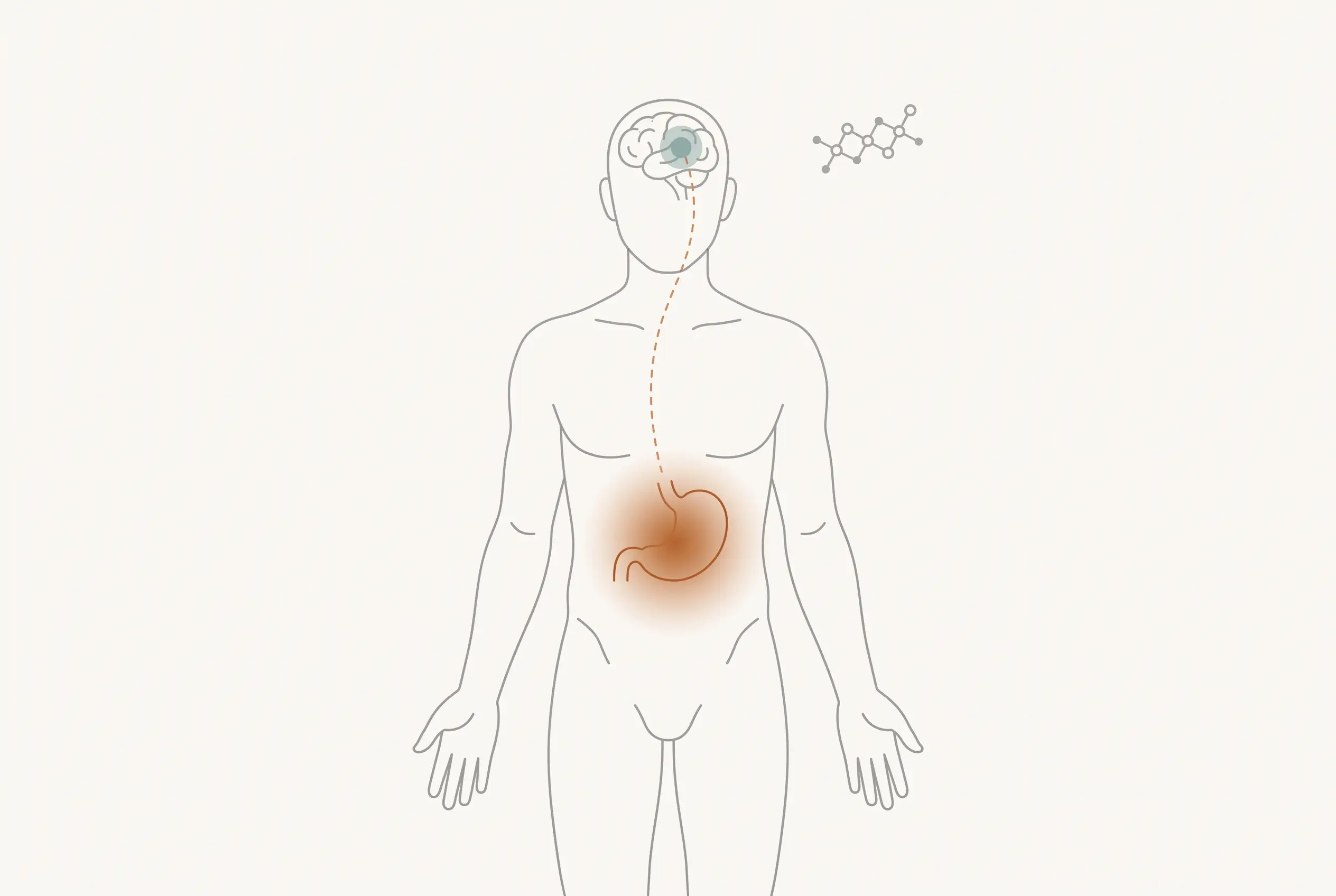
If you've heard of Ozempic and Wegovy, liraglutide is the drug that came first. It's the same basic idea (copy a gut hormone that kills your appetite), but it arrived years earlier and it needs a shot every single day instead of once a week. It's a real, approved prescription medicine, not a 'research chemical.' Here's the honest picture.
What liraglutide actually is
Liraglutide is a GLP-1 medicine. GLP-1 is a natural hormone your gut releases after you eat. It tells your brain you're full, slows how fast food leaves your stomach, and helps your body handle blood sugar. Your own GLP-1 breaks down within minutes.
Liraglutide is a lab-made peptide. A peptide is just a short chain of amino acids, which are the tiny building blocks that make up protein. It's built to look enough like GLP-1 to do the same job, but with a chemistry tweak that stops your body from clearing it out so fast. Instead of minutes, it lasts about a day. That's why it's a daily injection.
What it's approved and used for
Liraglutide is FDA-approved and sold under two main brand names, for two different purposes:
| Brand | What it's approved for | How often |
|---|---|---|
| Saxenda | Chronic (long-term) weight management | Once daily, injected |
| Victoza | Type 2 diabetes (blood sugar control) | Once daily, injected |
So it's the same molecule doing the same thing. The brand name just reflects which problem the doctor is treating.
Daily vs weekly: how it compares to the newer drugs
This is the part most people actually want to know. Liraglutide was the first of this family to get approved for weight management. Then semaglutide (Wegovy) arrived, and then tirzepatide (Zepbound). Both are once-weekly, and in head-to-head and large trials they generally produce more weight loss than liraglutide.
| Drug | Injection schedule | Rough position today |
|---|---|---|
| Liraglutide (Saxenda) | Once daily | The original approved GLP-1 for weight; still used, but often second choice |
| Semaglutide (Wegovy) | Once weekly | Newer, generally stronger weight-loss results |
| Tirzepatide (Zepbound) | Once weekly | Newest of the three; generally the strongest weight-loss results |
That said, 'older' doesn't mean 'useless.' Liraglutide has a longer real-world track record than the newer drugs, and for some people it's still the right fit, sometimes for availability, cost, insurance, or how their body tolerates it. That call belongs to a doctor.
What the evidence really shows
This is the strong part. Liraglutide is backed by large human clinical trials. That's why it earned FDA approval. That's a completely different tier of evidence from the animal-only or lab-dish research behind most peptides sold online.
- The SCALE Obesity and Prediabetes trial was a 56-week study in over 3,700 adults without type 2 diabetes, testing liraglutide against a placebo (a dummy injection) alongside diet and exercise. People on liraglutide lost meaningfully more weight than people on placebo.
- The SCALE Diabetes trial ran a similar 56-week test in adults who had type 2 diabetes and were overweight, and again found more weight loss than placebo.
- The LEADER trial followed over 9,000 people with type 2 diabetes and high heart risk for a median of almost four years, and found fewer heart-related deaths, heart attacks and strokes in the liraglutide group.
That last one matters. It's rare for a weight or diabetes drug to be tested that hard on whether it actually keeps people alive longer. Liraglutide was.
The honest limits and side effects
Approved and well-studied is not the same as harmless. Being straight about this:
- Nausea and diarrhea are the most commonly reported side effects. For a lot of people they're mild and fade; for some people they're bad enough to quit.
- It's a daily injection, not weekly. That's more needles and more chances to skip.
- The weight loss generally isn't as large as with the newer weekly drugs.
- Like the other GLP-1 drugs, it carries warnings about thyroid tumors seen in rodent studies, and about pancreas inflammation, which is exactly the kind of thing a doctor screens for before prescribing it.
- Weight tends to come back if you stop. It's treated as a long-term medicine, not a short course.
What the research points to
- Strong, reviewed human evidence for its approved uses: weight management and type 2 diabetes
- That it can lower appetite and help control blood sugar
- Evidence from a large trial that it reduced heart problems in people with type 2 diabetes and high heart risk
- A genuine, regulated, long-tracked prescription medicine, not a research chemical
What it does NOT prove
- That it's safe to use without a doctor's supervision
- That it matches the newer weekly drugs on weight loss: it generally doesn't
- That online 'research' versions are the same as the real medicine
- That it's free of side effects or right for everyone
Who talks about it, and why to be careful
Liraglutide shows up in weight-loss and biohacking chatter mostly as the 'cheaper old one,' and grey-market sellers list it next to semaglutide and tirzepatide. Two things worth remembering: those vials aren't the checked, regulated medicine, and an appetite-and-blood-sugar drug is not a good thing to self-experiment with. If a GLP-1 is right for you, the safe route is a real prescription from a real doctor, who can also tell you whether the daily one or a weekly one makes more sense.
What this does not mean
- This does not mean liraglutide is right or safe for everyone. It's a prescription medicine with real side effects.
- This does not mean online 'research' versions are the real, regulated medicine or safe to use.
- This does not mean liraglutide is better or worse than semaglutide or tirzepatide for any specific person. That's a medical decision.
- This is general education, not medical advice or a recommendation to use liraglutide.