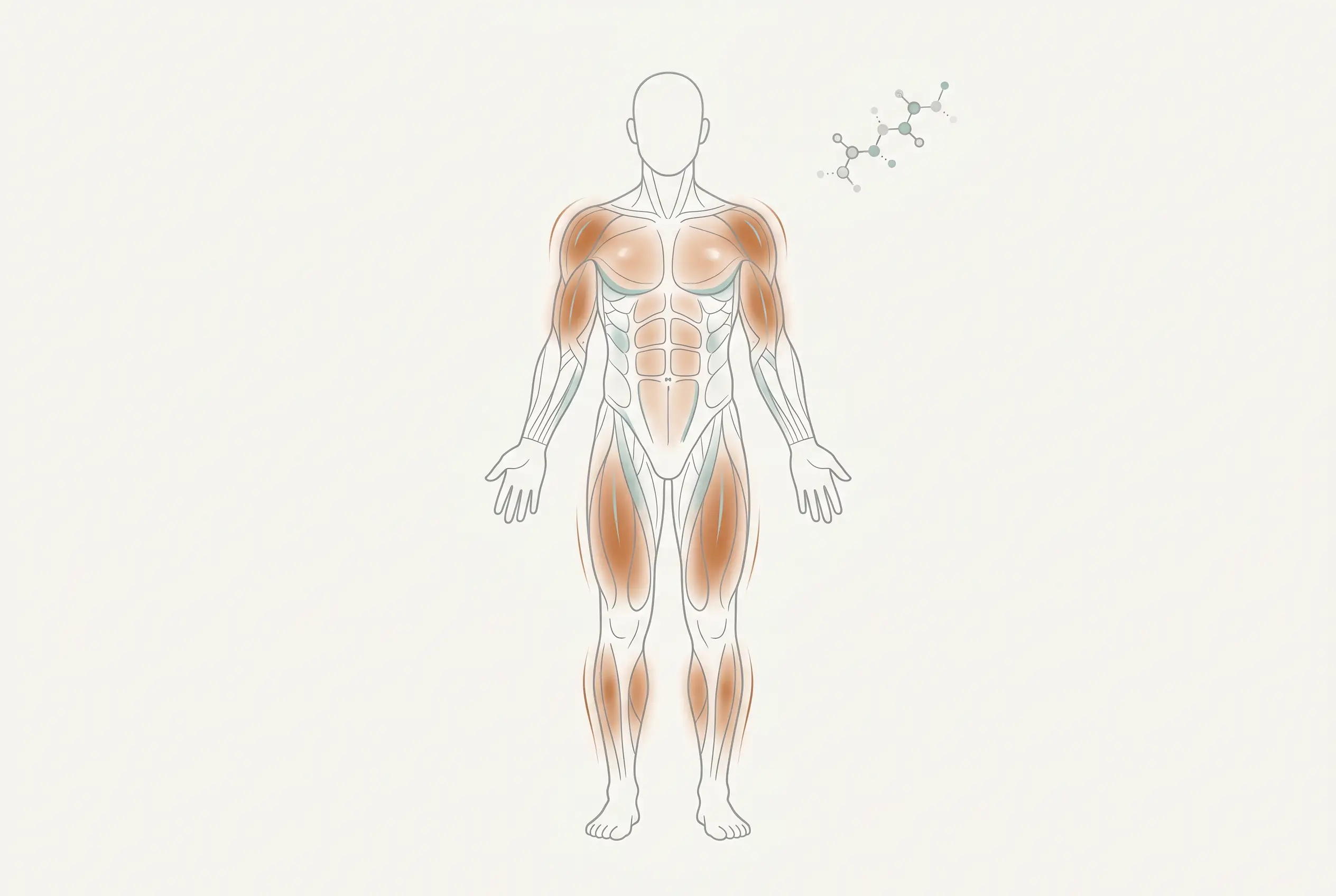
People throw 'peptides and SARMs' around like they're the same aisle. They're not. Let's cut to it.
The short version
Peptides are short chains of amino acids: signal molecules. SARMs are a totally different class that grab onto hormone (androgen) receptors to force muscle growth. Different mechanism, different risks. And most SARMs are unapproved with genuinely serious downsides.
The head-to-head
| Factor | Peptides | SARMs |
|---|---|---|
| What they are | Short amino-acid chains (signals) | Androgen-receptor compounds |
| How they act | Mimic or nudge body signals | Bind hormone receptors for muscle |
| Approval | A few approved; most not | Largely unapproved for human use |
| Main risks | Varies; unknowns in grey-market | Liver, hormone suppression, heart |
What peptides actually are
Peptides are short strings of amino acids: the same building blocks as proteins, just smaller. They tend to act like messages: telling the body to do something it already does. A few are real approved medicines (like semaglutide and tesamorelin). Many others (BPC-157, TB-500, ipamorelin) are unapproved 'research chemicals.' Want the full picture on how the categories break down? Read best peptides for beginners.
What SARMs actually are (and why they're different)
SARMs ('selective androgen receptor modulators') are not peptides at all. They work like a targeted cousin of anabolic steroids: they bind androgen (hormone) receptors to push muscle and strength. That's a fundamentally different mechanism from a signal peptide. And here's the deal: most SARMs are unapproved for human use, sold as 'research' products, and carry real, documented risks: liver strain, suppressed natural hormones, and heart/cholesterol concerns. This isn't a gentler steroid. It's an unapproved compound with teeth.
So which is 'safer'?
Wrong question. Both categories are dominated by unapproved shortcuts sold on the grey market, and with both you often can't verify what's actually in the vial or capsule. SARMs carry a distinct, well-documented risk profile around hormones and the liver. Peptides vary wildly. Neither is a free lunch: 'looks jacked, no consequences' is a fantasy.
What's true
- Peptides and SARMs are different classes with different mechanisms
- SARMs act on hormone receptors and carry real liver/hormone/heart risks
- Both are mostly unapproved and can't be verified from a grey-market seller
What's a myth
- 'Peptides and SARMs are basically the same': they're not
- 'SARMs are a safe, side-effect-free steroid': they carry real risks
- 'One of them is a free lunch': neither is
The honest verdict
Peptides ≠ SARMs: different molecules, different mechanisms. But they share a problem: both are mostly unapproved shortcuts with real downsides, and grey-market versions can't be verified. SARMs specifically play with your hormones and liver. Neither is a free lunch. If you want results, the boring, doctor-guided path is the one that won't surprise you later.
What this does not mean
- This doesn't mean peptides are automatically 'safe' just because they're not SARMs. Many are unapproved too.
- This doesn't mean SARMs are a mild steroid. They carry real, documented hormone, liver, and heart risks.
- This is general info, not medical advice. A doctor is the right call before touching either.