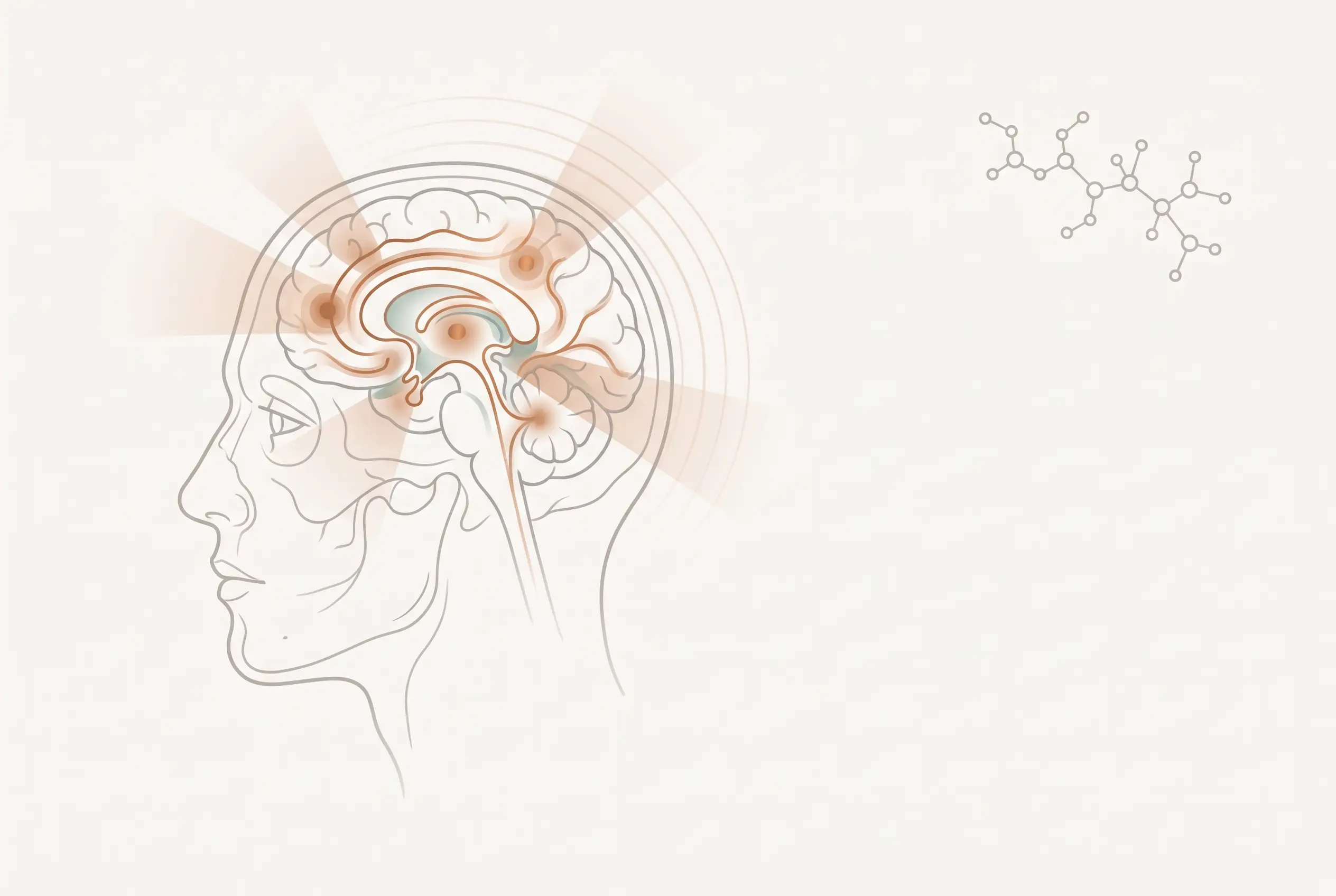
Cortexin is unusual in this field, and worth reading carefully for that reason. Most peptides sold online have no independent evidence at all: the question is simply open. Cortexin is different: someone actually looked. That makes it one of the few cases where we can say something firmer than "nobody knows."
What Cortexin actually is
Cortexin is an extract from the brain cortex of cattle, the cortex being the wrinkled outer layer of the brain that handles thinking and memory. It's a mixture of short peptides and amino acids pulled out of that tissue, not a single defined molecule. That means the contents can vary between batches and manufacturers, which is one reason Western regulators are uncomfortable with preparations like this.
It's often grouped with the Khavinson "peptide bioregulators" (Epitalon, Thymalin, Vilon), and it shares their organ-extract logic: take peptides from an organ, give them back, hope that organ works better. It's also closely related to Cerebrolysin, a similar brain-peptide mixture, the difference being that Cerebrolysin is made from pig brain and Cortexin from cattle brain.
It's a real medicine, in Russia
This distinction trips people up constantly, so let's be precise about it.
Cortexin is genuinely registered and widely prescribed in Russia, and in some other post-Soviet countries. Russian doctors use it for stroke, chronic reduced blood flow to the brain, brain injury, and cognitive problems. It's not fringe there: it's mainstream, it's in the guidelines, and there's a large Russian literature on it. One Russian review calls it the first Russian peptide with the largest evidence base.
It is not approved by the FDA, MHRA, or EMA. Those agencies have not evaluated and cleared it, and it isn't a licensed medicine in the US, UK, or EU. "Approved in Russia" and "approved" are not the same sentence, and vendors routinely blur the two.
What the independent evidence really shows
Here's where Cortexin becomes genuinely informative. Cochrane is an international network that reviews medical evidence and is about as close to a neutral referee as medicine has: no product to sell, no lab reputation riding on the answer. Their 2023 review of Cerebrolysin for acute ischaemic stroke also included a randomised trial of Cortexin, contributing 272 patients.
The finding, pooled across trials, was moderate-certainty evidence that these brain-peptide mixtures probably make little to no difference to all-cause death after a stroke. Not "we need more research." Not "promising but unproven." Reviewed properly, the survival benefit probably isn't there.
That is a much more useful answer than the shrug we're stuck with for Vilon or Pinealon. It's also a cautionary tale about what happens when a peptide with a huge, enthusiastic in-country literature finally meets independent scrutiny.
| Source of evidence | What it concluded |
|---|---|
| Cochrane review (2023, independent) | Probably little to no difference in all-cause death after stroke (moderate certainty) |
| Russian reviews | Consistently positive; describe a large domestic evidence base |
| Russian pilot studies | Report benefits for sleep and cognition, but small, and often without a control group |
| Rat studies | Improved memory and antioxidant markers in animals with restricted brain blood flow |
What the research points to
- Decades of real clinical use in Russia, where it is a registered prescription medicine
- Improved memory measures in rats with restricted brain blood flow
- A large Russian literature reporting benefits for stroke, sleep, and cognition
What it does NOT prove
- That it helps you survive a stroke: independent Cochrane review found probably no difference
- That it improves memory or cognition in humans: the positive studies are small and often uncontrolled
- That it's approved or legal as a medicine in the US, UK, or EU
- That Russian registration means Western regulators would reach the same conclusion: on the stroke evidence, reviewers didn't
The honest bottom line
Cortexin is a real medicine used by real doctors on a large scale. This isn't a scam product. But it's a real medicine in one regulatory system, and when its best-studied use was examined by neutral international reviewers, the benefit probably wasn't there. That's not a reason to sneer at it. It's a reason to stop treating "widely used" as if it meant "proven," which is the single most common mistake people make when reading about peptides.
What this does not mean
- This does not mean Cortexin is proven to help the brain. For stroke, the independent Cochrane evidence points the other way.
- This does not mean Cortexin is dangerous or fake. It means its benefits haven't held up under neutral review, which is a different finding.
- This does not mean Russian registration equals FDA or EMA approval. Those regulators have not evaluated it.
- This does not mean it's safe to buy and inject; unregulated animal-tissue products aren't checked for purity, sterility, or safety.
- This is general education, not medical advice or a recommendation to use Cortexin.