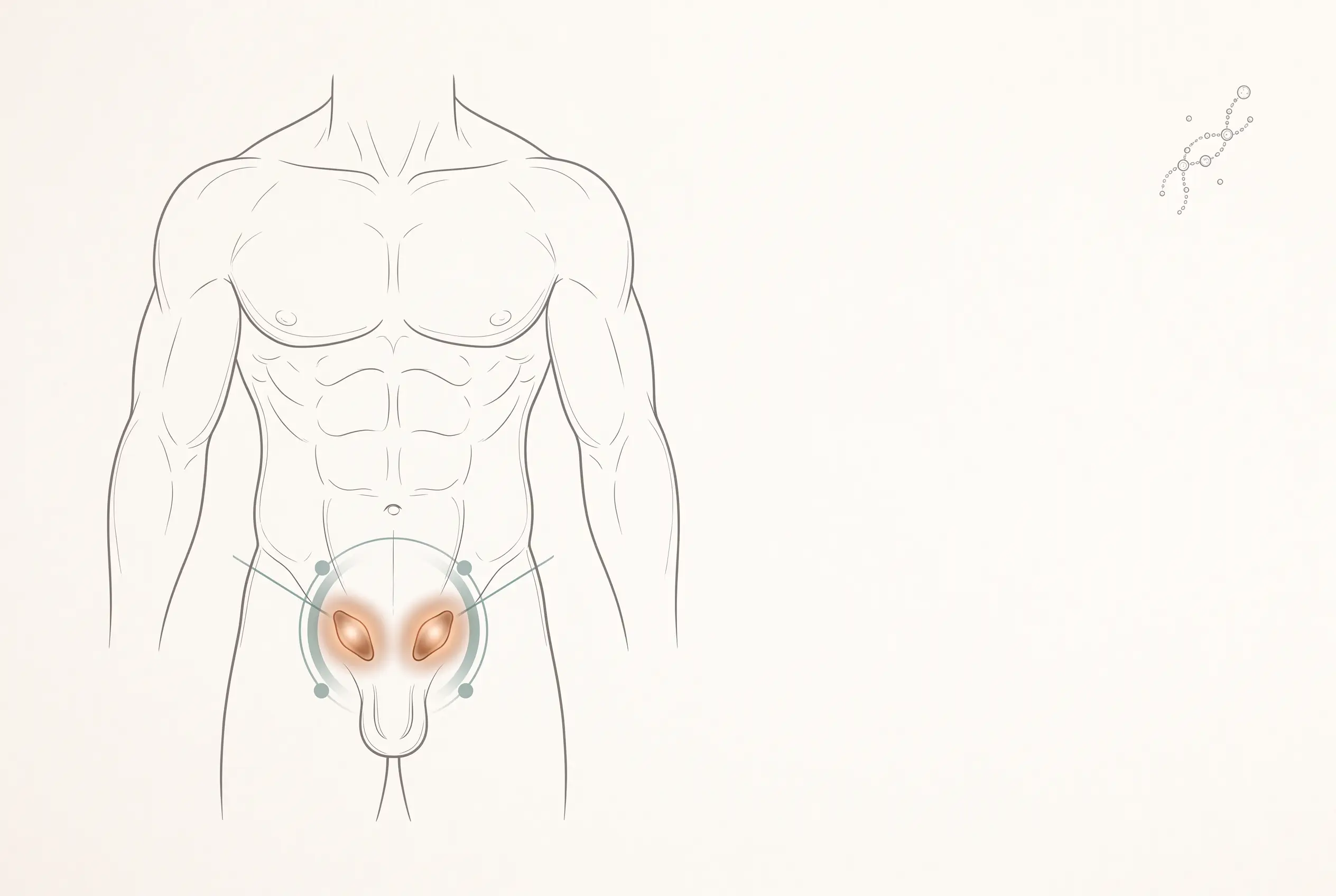
So you searched "best peptide for testosterone." Let's cut to it: no bro-science, no sales pitch.
The short version
There is no magic peptide powder that safely cranks up your testosterone. The peptides that do affect testosterone work on your body's own hormone signals, and they live firmly in doctor territory, not the grey-market corner of the internet.
The peptides people talk about for testosterone
| Peptide | What people claim | What's actually known |
|---|---|---|
| Gonadorelin | Boosts natural testosterone | Prescription; signals the pituitary; used clinically, doctor-supervised |
| hCG | Keeps testes working, raises T | Real medical tool, often alongside TRT; prescription only |
| Kisspeptin | Kickstarts your hormone axis | Promising research; upstream hormone signal; still doctor/clinical territory |
| CJC-1295 / Ipamorelin | Part of a 'test-boost stack' | These act on the growth-hormone axis, not the testosterone one. No human evidence they raise T |
The ones that actually touch testosterone (and why they're not DIY)
Gonadorelin, hCG, and kisspeptin are the real deal in the sense that they do interact with the system that makes testosterone. Gonadorelin and hCG have decades of clinical use behind them, in specific conditions: hypogonadotropic hypogonadism, delayed puberty, male fertility. Kisspeptin is a step behind that: real human studies exist, but they're small mechanism trials, not treatment approvals. And here's the catch on all three: they work by talking to your brain and testes to produce your own hormones. Get the signal wrong and you can throw the whole axis out of balance. That's exactly why these show up in a doctor's office (often around TRT) and not in a 'stack you found on Reddit.' They need bloodwork, monitoring, and a real prescription.
The GH peptide mix-up
A ton of 'testosterone stacks' online quietly swap in growth-hormone peptides like CJC-1295 and ipamorelin. Real talk: those act on the growth-hormone axis, which is a different system from the one that makes testosterone. Ipamorelin's foundational studies are in rats, and they're about growth hormone. There's no human evidence that either one raises testosterone, so they're not going to fix low-T. If a stack promises 'natural test boost' and it's mostly GH peptides, someone's blurring the line to sell you something.
The stuff with actual evidence
- Proper diagnosis of low-T with bloodwork by a doctor
- Gonadorelin / hCG: real prescription tools, doctor-supervised, often around TRT
- TRT itself: the actual, proven treatment for genuine low testosterone
The stuff that's mostly hype
- Any 'test-boosting' peptide powder you mix and inject at home
- GH peptides (CJC-1295, ipamorelin) sold as testosterone boosters
- Research kisspeptin as a self-directed low-T fix
The honest verdict
Low testosterone is a real medical thing, but no research chemical off the internet is going to safely fix your hormones. The peptides that actually touch testosterone (gonadorelin, hCG, kisspeptin) are prescription, doctor-run tools, usually around TRT, not DIY. And the GH peptides aren't touching testosterone at all. One thing worth knowing before you self-diagnose: the endocrinology guidelines say low-T should only be called low-T after symptoms plus repeat morning blood tests, because a single number on a bad day means very little. Feeling off? Get bloodwork and talk to a doctor. That's the move.
What this does not mean
- This doesn't mean gonadorelin or hCG are safe to self-inject: they're prescription tools for a reason.
- This doesn't mean GH peptides raise testosterone; there's no human evidence they do, no matter how the stack is marketed.
- This is general info, not medical advice. Only bloodwork and a doctor can tell you if your testosterone is actually low.