This is one of the rare GLP-1 comparisons where somebody actually ran the trial. No guessing, no indirect maths: a real head-to-head study, and a fairly clear result.
What's the actual difference?
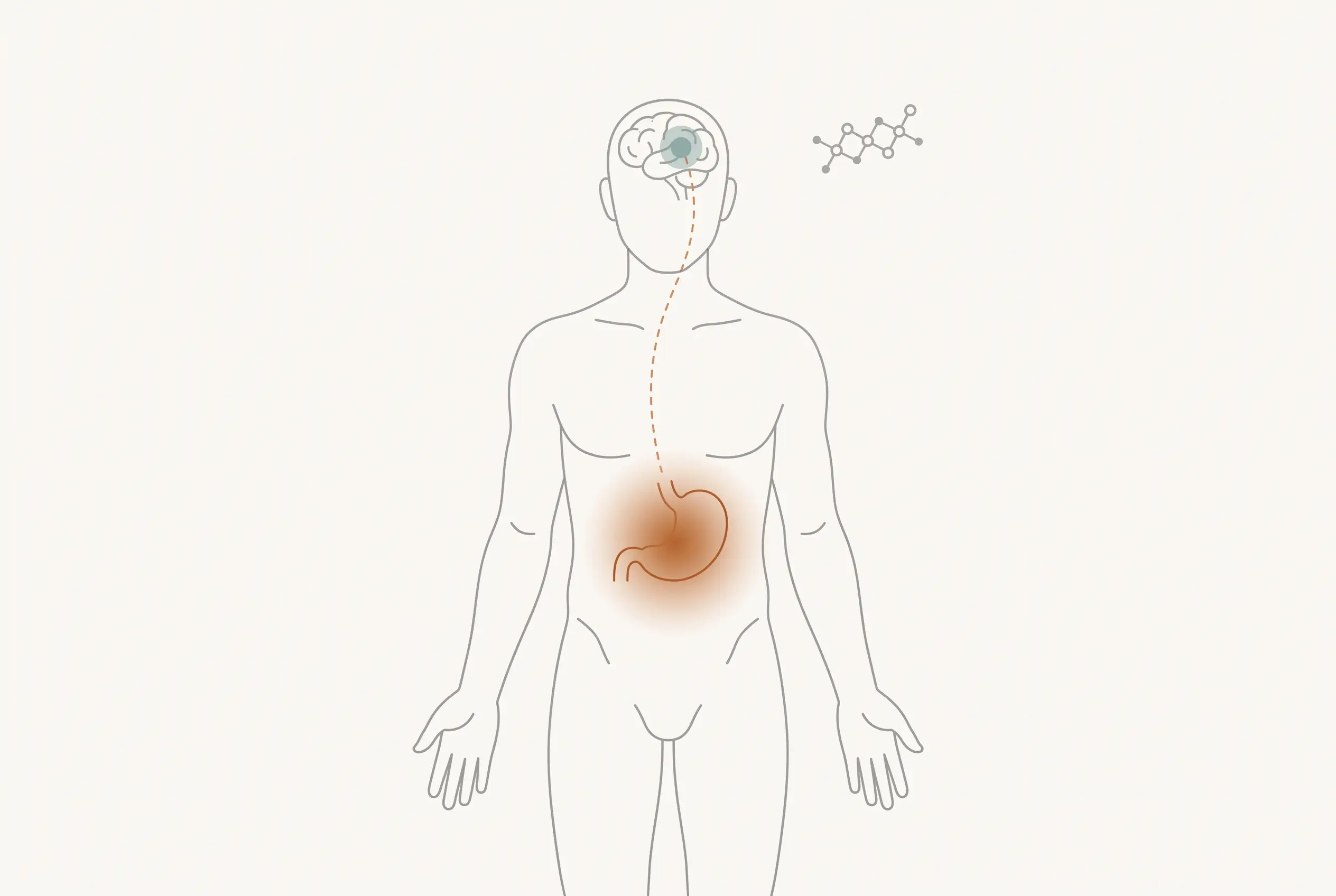
Both are peptides: short chains of amino acids, the tiny building blocks that make up protein. Both copy GLP-1, a hormone your gut releases after you eat that tells your brain you're full and slows how fast food leaves your stomach.
Your own GLP-1 breaks down in minutes. Both drugs are tweaked so your body clears them more slowly, but by different amounts.
- [Liraglutide](/peptides/liraglutide/) lasts about a day. That's why it's a daily injection. Sold as Saxenda for weight management and Victoza for type 2 diabetes.
- [Semaglutide](/peptides/semaglutide/) lasts about a week. That's why it's a weekly injection. Sold as Wegovy for weight management and Ozempic for type 2 diabetes.
Same family, same basic idea, roughly seven times fewer needles.
The head-to-head
| Factor | Liraglutide | Semaglutide |
|---|---|---|
| What it is | A GLP-1 peptide, the older one of the pair | A GLP-1 peptide, the newer, longer-lasting one |
| Approved? | Yes, FDA-approved (Saxenda for weight, Victoza for type 2 diabetes) | Yes, FDA-approved (Wegovy for weight, Ozempic for type 2 diabetes) |
| How it's taken | Injected once daily | Injected once weekly (an oral version also exists) |
| What trials showed | In the STEP 8 head-to-head, about 6.4% average body-weight loss over 68 weeks | In the same trial, about 15.8% average body-weight loss over 68 weeks |
| Main side effects | Mostly gut-related: nausea, vomiting, diarrhoea; carries a boxed warning | Mostly gut-related: nausea, vomiting, diarrhoea; carries a boxed warning |
| Banned in sport? | Not a WADA-prohibited substance, but check current rules with your governing body | Not a WADA-prohibited substance, but check current rules with your governing body |
Which one works better?
Semaglutide, and unusually for this category, we can say that from a real trial rather than a guess.
STEP 8, published in JAMA in 2022, randomised 338 adults with overweight or obesity (no diabetes) to weekly semaglutide or daily liraglutide, both alongside diet and activity advice, for 68 weeks. Average body-weight change was about -15.8% with semaglutide versus about -6.4% with liraglutide. Roughly 71% of the semaglutide group lost at least 10% of their body weight, versus about 26% on liraglutide.
There's a second detail that gets overlooked: fewer people stopped treatment on semaglutide (about 13.5%) than on liraglutide (about 27.6%). Gut side effects were common on both (over 80% in each group), but people seemed more able to stick with the weekly one.
One honest caveat: the semaglutide-versus-liraglutide comparison in STEP 8 was open-label, meaning participants knew which drug they were getting. That's a real limitation, though the size of the gap makes it hard to explain away.
Is liraglutide obsolete then?
No. It's still an approved medicine that works, and there are ordinary reasons a doctor might pick it: what your insurance covers, what's actually in stock, how you respond, or what your medical history rules out. It also has its own large cardiovascular outcomes trial (LEADER) behind it in people with type 2 diabetes.
There's also a practical wrinkle nobody mentions: a daily drug leaves your system faster. If side effects hit hard, that can matter. 'Older' is not the same as 'bad'.
Which is safer?
Broadly similar. Both mainly cause gut trouble, both carry a boxed warning (the strongest warning the FDA puts on a label), and both have been used by large numbers of people for years. The real difference in STEP 8 wasn't the type of side effects, it was how many people gave up because of them.
What's true
- Both are FDA-approved, prescription-only GLP-1 medicines
- Liraglutide is a daily injection; semaglutide is weekly
- In the STEP 8 head-to-head, semaglutide produced roughly 15.8% average weight loss versus 6.4% for liraglutide
- Fewer people discontinued treatment on semaglutide in that trial
What's a myth
- 'Liraglutide is obsolete': it's still approved, still works, and is still prescribed for good reasons
- 'Weekly means fewer side effects': gut side effects were common on both in STEP 8
- 'You can substitute a cheaper research version': you can't verify what's in a grey-market vial
Which should you ask a doctor about?
If your goal is maximum weight loss and you have a choice, semaglutide is the one with the better head-to-head number, and once a week is easier to live with than once a day. But cost, coverage, supply, and your medical history routinely override that, and liraglutide remains a perfectly reasonable answer. Bring both names to the appointment rather than a decision.
The honest verdict
Semaglutide beat liraglutide in the one trial that compared them directly, on both weight loss and how many people stuck with it. That's about as clear as this category gets. But liraglutide is still an approved, working medicine, and 'the drug with the better trial average' isn't automatically the drug for you. That's a doctor's call.
What this does not mean
- This doesn't mean liraglutide doesn't work. It's approved, it produces real weight loss, and it's prescribed for good reasons.
- This doesn't mean semaglutide is right for you. Trial averages describe groups, not individuals.
- This doesn't mean weekly injections are gentler. Gut side effects were common with both drugs in STEP 8.
- This is general information, not medical advice. A doctor decides which medicine, if any, fits your situation.